
The Importance Of Avoiding Timing Belt Failure
Preventative timing belt replacement is one of the toughest sells in the shop. The customer’s car is running fine. They can’t see the belt. And the “if it ain’t broke, don’t fix it” mentality is stronger than ever. They just see a big labor bill for a part that isn’t broken… yet.
But the job of the service advisor is to help the customer understand that they’re not just buying a belt; they’re avoiding disaster.
Modern Interference Engines
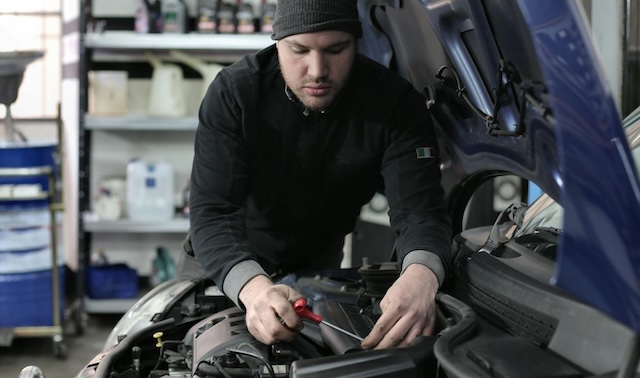
Many car owners don’t know the difference between an interference and a non-interference engine.
Basically, interference engines are designed with the valves perfectly timed with the pistons. If the timing is off, they can collide. Interference engines are more common in modern vehicles.
In non-interference engine designs the pistons and valves won’t ever make contact with each other – no matter what happens with the timing belt. This design was more common in the past – when engines used lower compression ratios.
Back in the day, if a timing belt snapped on a non-interference engine, the customer got a tow and a new belt. No harm, no foul. Those days are over. The non-interference design was a luxury of low-compression engines. Today, in the hunt for more power, efficiency, and lower emissions, everything has changed. Higher compression, VVT, GDI… all these modern designs demand razor-thin tolerances.
Virtually every modern engine with a timing belt is an interference engine – meaning there is no ‘safe’ way for that belt to fail.
A Failed Timing Belt Is Catastrophic
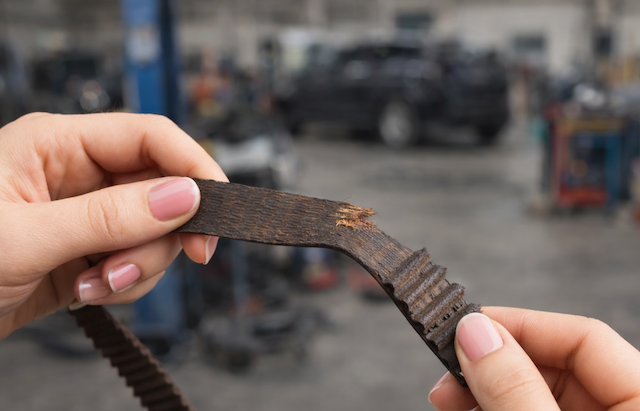
It’s important that your customer know what a belt failure in an interference engine means. When that timing belt breaks, the camshafts stop instantly. But the rotating assembly – the crank and pistons – doesn’t, due to inertia.
In an interference engine, that means the pistons are going to smash into the valves that are stuck open. It’s a guaranteed, catastrophic failure. It’s not a simple fix; there will be bent valves, broken pistons, and a trashed cylinder head. The repair bill just went from a few hundred dollars for a maintenance job to thousands for a new engine.
This is the ‘why.’ A preventative replacement is the cheapest insurance policy they will ever buy.
Why A Timing Belt Kit Is Best
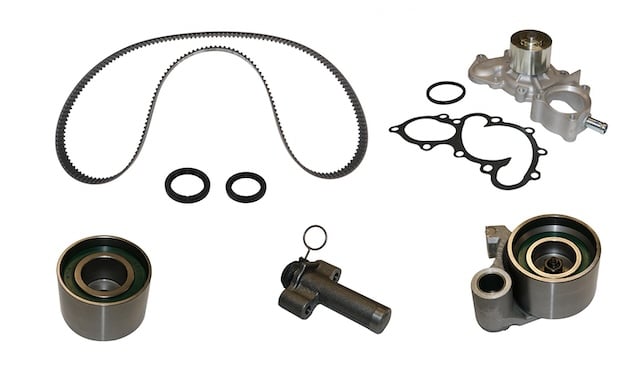
Once the customer understands the ‘why,’ make sure you’re doing the ‘how’ correctly. This is a time and labor-intensive job. This is why the timing belt kit is recommended – it’s the best way to do the repair correctly and guarantee it for the long haul. Replacing related components just makes sense:
- The Water Pump: It’s driven by the timing belt. Its bearings and seal live the same hard life. Swapping it now is a no-brainer.
- Tensioners and Idler Pulleys: These are often the actual cause of failure, more often than the belt itself. A seized idler or a weak tensioner is what shreds the belt. Replacing them is a must.
High-Quality Timing Belt Kits From GMB
Customer skepticism is understandable, but ultimately, a timing belt kit isn’t just a part; it’s a solution. Build trust and keep them on the road by using the best quality components when you do this service. GMB has been an industry-leading OE and Aftermarket automotive product manufacturer since 1943. Contact us today to order your high-quality GMB parts like water pumps, timing belts, fuel pumps and much more.